Meta · 2024 · Senior Content Designer & UX Strategist
Writing rules for AI before there were any
Led the working group that authored Meta’s risk framework for generative AI in content and design.
Defined the risk categories, severity levels, and mitigation plans for a technology nobody had rules for yet.
Approved by design leads across every Meta pillar.
Risk frameworksAI governanceCross-team leadership
The problem
By 2024, designers, engineers and product managers all wanted to use AI to speed up and scale their work. For a company servicing over a billion people, we had to do this responsibly, in a world with no established norms (yet).
Key challenges
Risk for AI-generated content had never been defined, so there was nothing to measure against. Teams across Meta also had their own interpretations and tolerance for risk. Designers wanted to use AI responsibly, but couldn’t assess risk they had no framework for. The tools were already in use, so the rules had to meet people where they were.
The brief
Write the rules for AI, before there were any.
What I did
I led a core working group, drawing input from designers across the company with different teams and expertise. The work spanned across:
Defining the risk categories
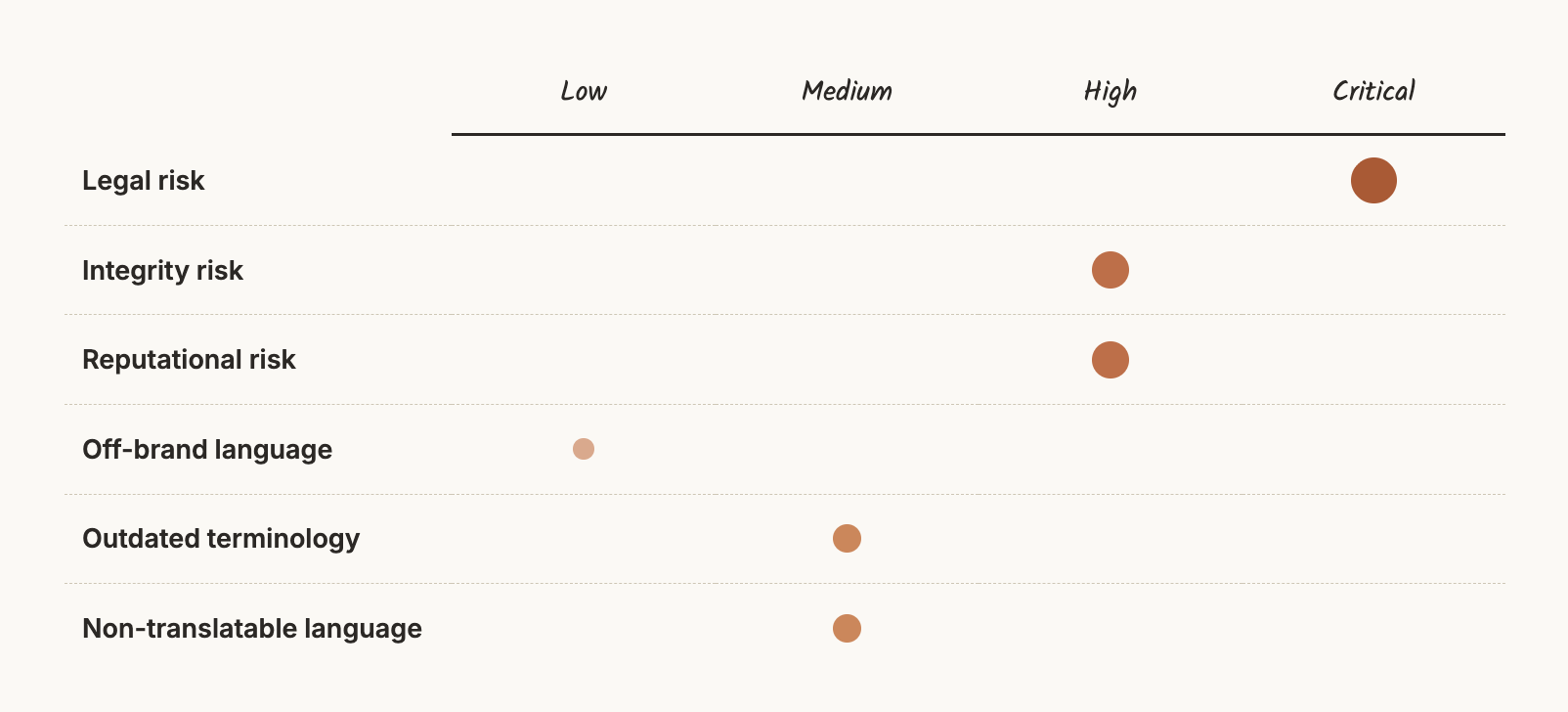
Legal risk, integrity risk, reputational risk, off-brand language, outdated terminology, non-translatable language, and more.
Assigning severity
Every category got a risk level, so teams could better understand if they were working in a high-risk territory.
Designing mitigation
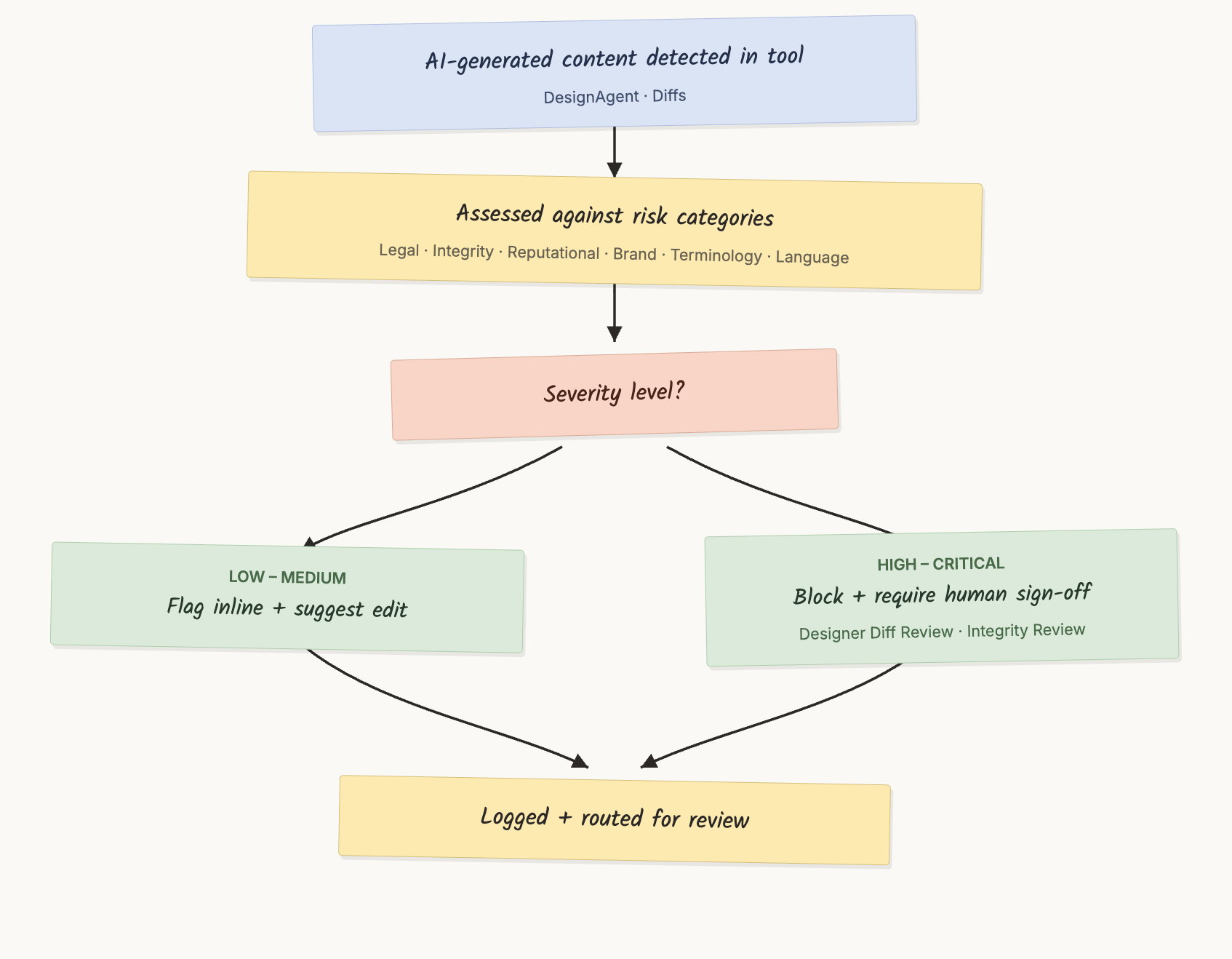
If risky content was detected through AI-generated tools, we determined how to communicate to the user that it could be harmful, and when human sign-off should be encouraged or required.
Sample 1
Risk categories & severity
Mapping each risk category against its severity level, from low to critical.
Illustrative mapping
Sample 2
Mitigation & escalation flow
How severity determined whether content was flagged inline or blocked for human sign-off.
Illustrative mapping
Note: The framework itself is internal to Meta, so this case study shows the thinking rather than the artifacts.
And then what happened?
Design leads across every Meta pillar approved the risk framework.
Legal and integrity teams were comfortable with the approach — the two pillars with the lowest tolerance for risk.
I later brought the same safety, quality, and craft mindset to experimental AI features on Facebook, including feed summarization of friends’ content and an assistant to help people stay connected.
The framework was being integrated into our tooling but I left Meta before seeing this finalized.
What I learned
In a climate where AI is pushing everything faster than it’s ever gone, there was a strong appetite to make sure we were doing this right.
However it became clear that governance works best if it doesn’t get in the way. This framework was successful because it was designed to catch risk inside the tools teams were using without slowing them down.